

Why I Built Shared Ground

Looking for Solid Ground
My early career started in business operations for a large technology company. This was my first career pivot after leaving public education in search of financial stability during my divorce.
I remember feeling scared and untethered. I was young, navigating the end of my marriage, and searching for solid ground wherever I could find it.
Overall I enjoyed the work. There was space for me to be challenged, work on a variety of projects, hone skills in writing, communication, and training. For the first time in a long time, I found myself in a place where being smart, capable, witty, and bright was valued. I began to recognize those parts of myself again. I quickly became known as a leader and keeper of knowledge, which was a tremendous boost to my confidence.
Still, I couldn't shake the feeling that something essential was missing. What I liked about teaching was helping others, being part of a community, and being in service to others.
At first, those thoughts were easy to ignore. I genuinely enjoyed my work and the people around me. But over time, the cracks began to show.
Being taken advantage of for being smart.
Discriminated against for being a woman.
Put down for being creative.
Yelled at for refusing to fit neatly into the boxes others had created.
The bullying didn't happen overnight. It crept in slowly through dismissive comments, impossible expectations, and subtle messages about whose needs mattered. I was often expected to sacrifice my own planned time off so colleagues with children could have theirs, as though my life outside of work mattered a little less.
The message became clear: do what you are told, don't ask too many questions, know your place.
When I raised concerns about the inequity, I wasn't ignored. I was often thanked with a gift card or a small bonus. At first, it felt like recognition. Over time, I realized it was easier to thank me for carrying an unfair burden than it was to change the system that created it.
Slowly, I realized this wasn't just about me anymore.
Not every voice mattered. Not everyone had a seat at the table. Creativity and intelligence were welcomed only when it fit inside existing boundaries.
What troubled me most wasn't just my own experience. I began to notice it everywhere. Work started to feel increasingly transactional, as though everyone was fighting for limited resources, recognition, or security. The relationships felt increasingly superficial. There was little room for genuine curiosity, compassion, or connection. The sense of community I had once felt was quietly eroding. I watched people become disconnected from themselves, from one another, and from the communities around them. Productivity had become more important than people.
It felt like watching a community fail itself.
I found myself searching for something different, though I couldn't have told you exactly what it was. So I started volunteering. I helped kids learn to read at a local elementary school. I taught English to second-language learners. I volunteered at a local community mental health agency in the marketing department, helping organize systems and plan community events. I felt myself awakening through this work. I couldn't name it yet, but something about this work felt different. I felt most alive when I was helping people learn, connect, heal, and find belonging.
Finding My Place

Then in 2016, Donald Trump was elected for his first term. I sat at a diner with a friend watching the news in disbelief.
I woke up the next morning convinced I had dreamed the whole thing. I hadn't. The feeling in my gut was one I had only experienced once before, on September 11th. Not because the events were the same, but because I knew, with unsettling certainty, that the world had shifted beneath my feet.
It was that November night, in that diner, that I knew: I can’t do this anymore. Trump's election crystallized concerns I had already been carrying about community, belonging, values, and the direction of the world. I needed to live my values. I needed to be part of the solution, not contributing to the problem. Just imagining it lit a fire in my belly. I knew I was beginning to move toward a life that felt more like my own.
I worked with my therapist to find a new career path (ironic, right?).
My therapist kept bringing me back to the same questions: When do you feel most like yourself? What kind of work leaves you feeling more alive than when you arrived?
I wasn't looking for the perfect career. I was looking for a place where I fit. A place where my values and my work no longer felt like they were pulling in opposite directions. I wanted to feel connected to something larger than myself and to know that the work I was doing contributed, in some small way, to a more compassionate world.
I briefly considered other tech companies, but every opportunity felt like more of the same.
Teaching was discussed, and I knew in my soul I didn’t want to return to the classroom full time. Changes to public education no longer felt aligned with what I would want out of teaching.
Social work felt too rigid and systems-oriented. At the time, my understanding of the field was limited and largely shaped by child welfare work, which didn't feel aligned with what I was seeking.
Then, a 2am thought came to me.
Therapist.
I could feel that excitement in my belly. I knew this was right. It was so obviously aligned. For the first time, I could imagine a career where who I was and what I did didn't have to be separate.
I immediately applied to schools and waited for their response. The process itself told me a lot. One school expected me to quit my job to attend. Another didn't seem to know what to do with an adult changing careers. Then I attended an information session at the program where I would eventually enroll. Sitting there was a good friend from my tech company. I smiled. It felt like a sign.
Graduate school was exciting, but it also stirred up every bit of imposter syndrome I had. Many of my classmates had known for years that they wanted to become therapists. They had studied psychology as undergraduates, talked confidently about their theoretical orientations, and already knew the populations they hoped to serve. I had a liberal arts degree, a decade in corporate leadership, and far more questions than answers. I worried I was already behind. I worried everyone else knew something I didn't. I wondered if I would ever figure it out.
Once school started, I knew the next step had to be making the leap from tech to mental health.
I was excited, but I was also tired. Tired of being told I was the only person who could solve a problem one day, and then have my intelligence and judgment questioned the next. Living inside those contradictions was exhausting. I knew I couldn't stay where I was forever.
To even get interviews, I had to simplify my résumé. Leadership roles disappeared. Accomplishments I had worked hard for quietly came off the page. It felt less like editing a document and more like erasing a version of myself. I knew those experiences hadn't disappeared, but taking them off the page felt like grieving a life I had worked incredibly hard to build.
In January 2019, I took the biggest leap to date and left tech to work at a local withdrawal management (detox) program within a community mental health agency. I was leaving a comfortable salary, great benefits, and an identity I had spent over a decade building. I was excited and terrified.
What if I was terrible at this?
What if this wasn’t for me?
What if I made the wrong choice?
One fear sat quietly underneath all the others. I had never struggled with addiction myself, and I worried clients and colleagues would see me as someone who couldn't possibly understand.
Instead, I found a band of outsiders. People with complicated stories, unconventional paths, and enormous hearts. I realized that while our lives looked different, we shared something important. Many of us knew what it felt like to be misunderstood, underestimated, or not quite fit where we were expected to. For perhaps the first time in my professional life, I felt like one of them.
The conversations came naturally. Sitting with people in vulnerable moments didn't drain me, it energized me. For the first time in years, I wasn't annoyed about going to work. I was excited for it.
Yet one thing felt strangely familiar. That same condescension I experienced in tech was present. I had hoped the culture would be different. I wanted to believe that people who dedicated their lives to helping others would also know how to care for one another. When I realized that wasn't always true, I was deeply saddened.
The bullying.
Demeaning comments.
Being told we were not smart enough to do this job, that we were replaceable.
Toxicity from leadership, especially from women.
I thought I had left that part of my life behind. It wasn't just disappointing. It challenged something I wanted to believe about the world.
Yet I stayed. I wanted to learn. I wanted to become the best therapist I could be. I trusted that the next step would reveal itself when I was ready.
When the World Stood Still
Then the pandemic happened. That year provided me with so much down time to reflect. Even though we were going to work as essential employees, nothing else was happening. For the first time in my adult life, I had time to really think about what mattered.
I began to realize that I had never fully turned toward my new life. I had moved so quickly from one career into another that part of me was still facing the life I had left behind. The pandemic slowed the world down just enough for my heart and body to finally catch up with the decision my mind had already made.
All while the world grappled with the uncertainty of COVID, wondering what was safe, what was coming next, and when life might feel familiar again.
All while my dad was diagnosed with terminal cancer. Moving him to an assisted living via phone calls since no visitors were allowed. Emptying his San Jose apartment with my sister during the shutdown.
All while carrying the grief of my grandmother's death from the year before.
Grief seemed to be in every step I took and every direction I looked. Yet amidst that grief, there was also connection. I spent time with friends, deepened old friendships, and cultivated new relationships. In a season when so much felt uncertain, those connections became anchors. They reminded me that even in the midst of loss, we are not meant to carry everything alone.
I spent as much time outside as I could. Swimming in lakes, hiking in the mountains, lying in the park, riding my bike with the wind in my hair. The slower pace of life gave me permission to rediscover parts of myself I had quietly left behind. I drew. I wrote. I explored new places. Days unfolded without an agenda. Somewhere along the way, adulthood had convinced me those parts of me were optional. I was beginning to realize they weren't. I touched grass, the sun kissed my skin, and the air was never so pure in my lungs. It reminded me where I felt the most connected, and that nature holds us and cares for us when we let it.
I started my internship at hospice in the early Fall of 2020. Sitting with people in their grief was so natural for me. Holding space for their pain, for their confusion, for their anger. We spent time outside, walking, and sitting on park benches. I learned their stories and the stories of their person. I held space and saw how being outdoors helped grievers process and heal. I knew grief work was calling me even before, and this experience only deepened that pull.
Then a client died at detox in October of 2020. I had yet to have this experience. Even if I had, nothing can prepare you for this type of loss. As we dealt with transitioning clients off the unit that morning, talking to police and the coroner, our Director said on a virtual call, “so you’ll re-open when the coroner leaves.” Three of us supervisors sat in stunned silence. My stomach churned as I looked around at our traumatized team. Another supervisor mustered the will to speak and pushed back. We were only given approval to close that day, expected to re-open the next morning, and no one was provided with any kind of leave or additional support.
We were the support. We had to support each other and our team and our clients and ourselves.
When I told my school supervisor what had happened, the response was stunning: “Yeah, clients die sometimes.” No support. No compassion. No acknowledgement that I might not be okay. Just a neutral and dismissive, yeah that happens.
Thankfully, not everyone responded that way. My hospice supervisor met my grief with compassion and humanity. In many ways, she showed me the kind of support I would later hope to offer others. I didn't realize it at the time, but I was beginning to learn what meaningful care actually looked like.
Planting Seeds
Then things changed. Our team was moved under a different Director. For the first time, I experienced leadership that trusted people to lead, make decisions, and grow. To my surprise, that trust felt almost disorienting. I had become so accustomed to having my judgment questioned that being trusted took time to get used to.
I was finally realizing what leadership could feel like. Not only having a leader who trusted me and gave me space to make decisions, but also allowed me to develop into the kind of leader I wanted to be. I could be a good leader and be myself at the same time, something I did not know was true.
Still something was missing. I felt like I had one hand tied behind my back sometimes and couldn't truly lead how I wanted to lead. I wanted a space rooted in trust, collaboration, community, and care - not a single person driving those values, rather something inherent in the roots themselves.
So I built my first private practice in 2022. For the first time, I could see what kind of space I wanted to create for myself and for others. This was when the seedlings of the future were planted. The early vision was something grounded in humanity, support, collaboration, and the belief that we heal in community and nature; that I am because we are.
And right as I built that, my dad took a turn and was put on hospice. Our relationship had always been complicated. Dementia and cancer only made it more so. I often found myself making impossible decisions in isolation while absorbing his anger and confusion. I loved him, and I was exhausted. There were days I quietly wondered if the greatest kindness for both of us would be for his suffering to end. Carrying that kind of anticipatory grief felt lonely in ways I still struggle to describe.
Then my soul dog, Jax, died from kidney disease at only five years old. I thought I might die right along with him.
And then my uncle died unexpectedly and tragically in August 2022. I was destroyed. The grief we had as a family following his death was immense. My community was mostly supportive, and there were some who just did not understand what it meant to grieve.
Nature became the place where I could mourn most freely. The noise of the world was relentless. Grief was always there, nagging at me, but there was rarely space to listen. Being outside quieted everything else. It gave me room to breathe, to slow down, and to be present with whatever needed my attention most. I went on walks, touched the trunks of trees, watched dragonflies dance around me, and listened to the birds sing their songs to one another. It was outside that I felt the presence of everyone I had lost most strongly, without the noise of the world to interfere.
What Was Growing
The following summer, I started a community grief group. I wasn't trying to build a business. I simply wanted to offer something to my community that felt aligned with my values, something I couldn't offer within my job. The truth is, I was grieving too. I was longing for community just as much as I hoped to help create it.
I made a simple flyer in Canva, shared it on social media and Nextdoor, and waited to see if anyone would come. And people came.
It turned out I wasn't the only one longing for community. Initially, the group had some structure - it was meant to last for six weeks and follow an introductory book about grief. Three years later, and several meeting locations later, we are still intact, meeting monthly, holding space for each other, checking in on each other, and welcoming new grievers to our space. This group was quietly nudging me toward what I did not know was coming and whispering that grief work would be at the center of my future. Along the way, I met a close friend and colleague who became, and remains, an invaluable sounding board. Through grief, career changes, business decisions, and moments of uncertainty, she has helped me stay connected to my values and to myself. Some people arrive in our lives and quietly help us find our way. She has been one of those people for me.
In 2025 I was not quite ready to fully leap to private practice. Something in me kept saying, "Not yet." Something was still missing.
I accepted a position leading an outpatient team at another community mental health agency. The agency's values felt aligned with my own, and it seemed like the right place to continue growing as both a therapist and a leader while I figured out what came next. Besides, a stable paycheck and health insurance never hurt anyone.
Simultaneously, I started training as a clinical natural medicine facilitator, knowing that it was a path I felt deeply drawn toward. As part of that training, we traveled to Oregon for a practicum.
My dad died just before that trip after months of intense decline.
And then my dog, Jewel, died the week before from dementia.
I knew my maternal grandmother was not far behind as her health and mind were rapidly deteriorating.
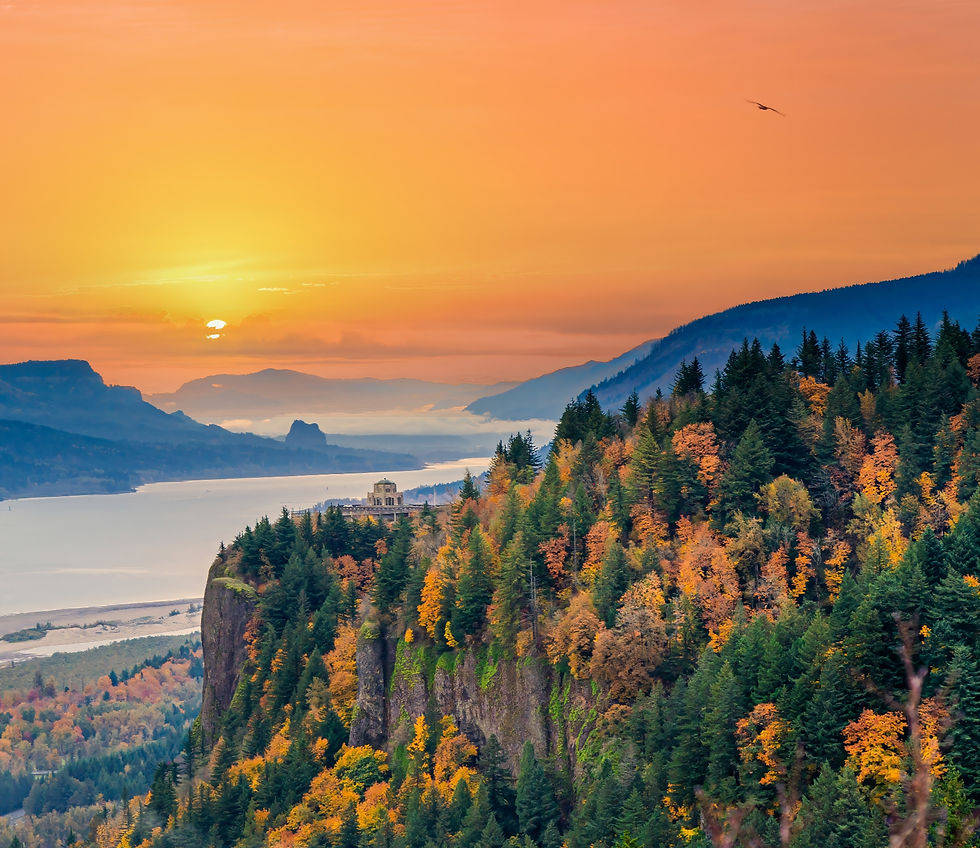
By the time I arrived in Oregon, I had lost touch with parts of myself again. Being surrounded by those towering trees and breathing the crisp autumn air, I felt something begin to stir. It wasn't that Oregon changed me. It reminded me of who I already was.
Being under those trees, feeling the air, and the sun, gave me space to grieve and mourn. I could cry and laugh, share stories, and reflect without the noise of everyday life. I realized I didn't have to choose between solitude and community. I needed both.
During that practicum, I also witnessed the power of community and groups. I was reminded of the impact a safe container can have in healing our grief. I watched people connect more deeply with themselves, with one another, and with nature.
I left that trip with something stirring in my gut. I couldn't explain it then, but I knew I couldn't ignore it.
Shared Ground
Then earlier this year, I received a cease and desist to my private practice. There was a practice in California with a similar name, apparently there had been some confusion in the community, so they wanted me to stop using the name. I was terrified and heartbroken. This thing I had been building for four years felt like it was being ripped away. I was grieving so much loss already, and this felt like more than I had the capacity for at the time.
Looking back, I don't think I was only grieving the loss of a name. I was also letting go of a path that no longer fit what I had become.
I realized I had been building Shared Ground for years without knowing its name. Every disappointment, every grief, every mentor, every walk beneath the trees, every community circle had quietly shaped what it would become.
The name was new. The vision wasn't.
I wanted to build something different because I know what it is like to...
Not belong.
Not fit.
Take up too much space.
Feel othered.
Be misunderstood.
Over time, those threads became the three paths that make up Shared Ground today.
Three Paths. One Ground.
Why Counseling & Recovery?
Some things belong in the therapy office. Some things need a clinical lens for support, healing, and growth.
Why Community Circles?
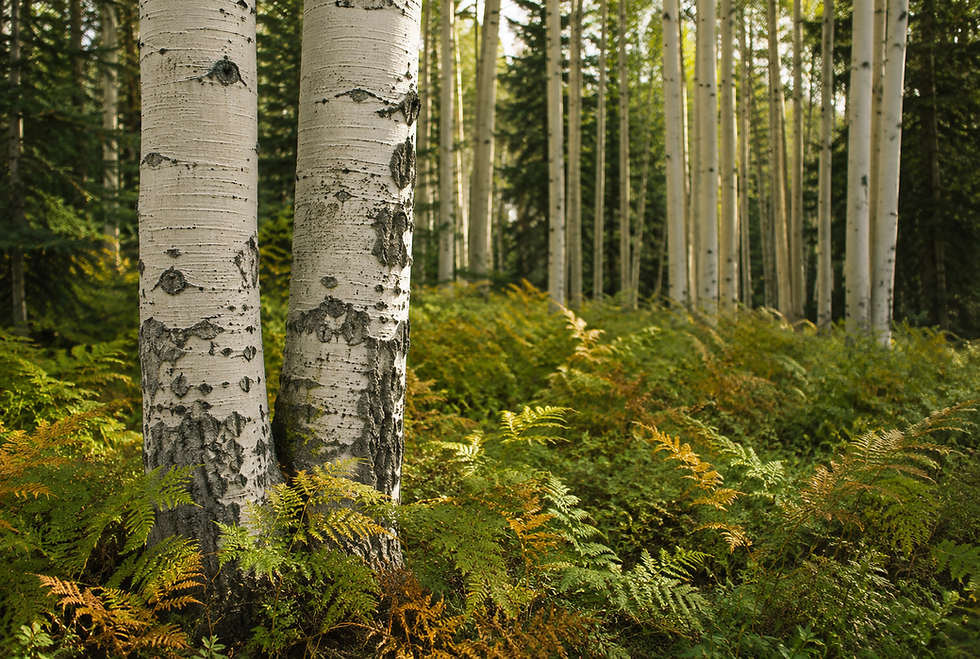
The aspen by itself is not as strong and healthy as the aspen in the forest. We heal parts of ourselves when our pain is witnessed, understood, and held by others.
Why Integration?
Sometimes healing happens in places therapy alone cannot reach.
All three paths are grounded in care, connection, and integrity. No one is excluded.
We all deserve a place to belong.
Shared Ground is my attempt to help build one.
Continue the Conversation
If these reflections resonate with you, you're welcome to subscribe to the Journal. New essays arrive about once a month, with occasional updates about Integration, Community Circles, and other upcoming offerings.